Documented real-space, direct numerical integration computation of 1loop contributions of the halo/galaxy power spectrum See arXiv:2010.14523 for explicit expressions.
More...
|
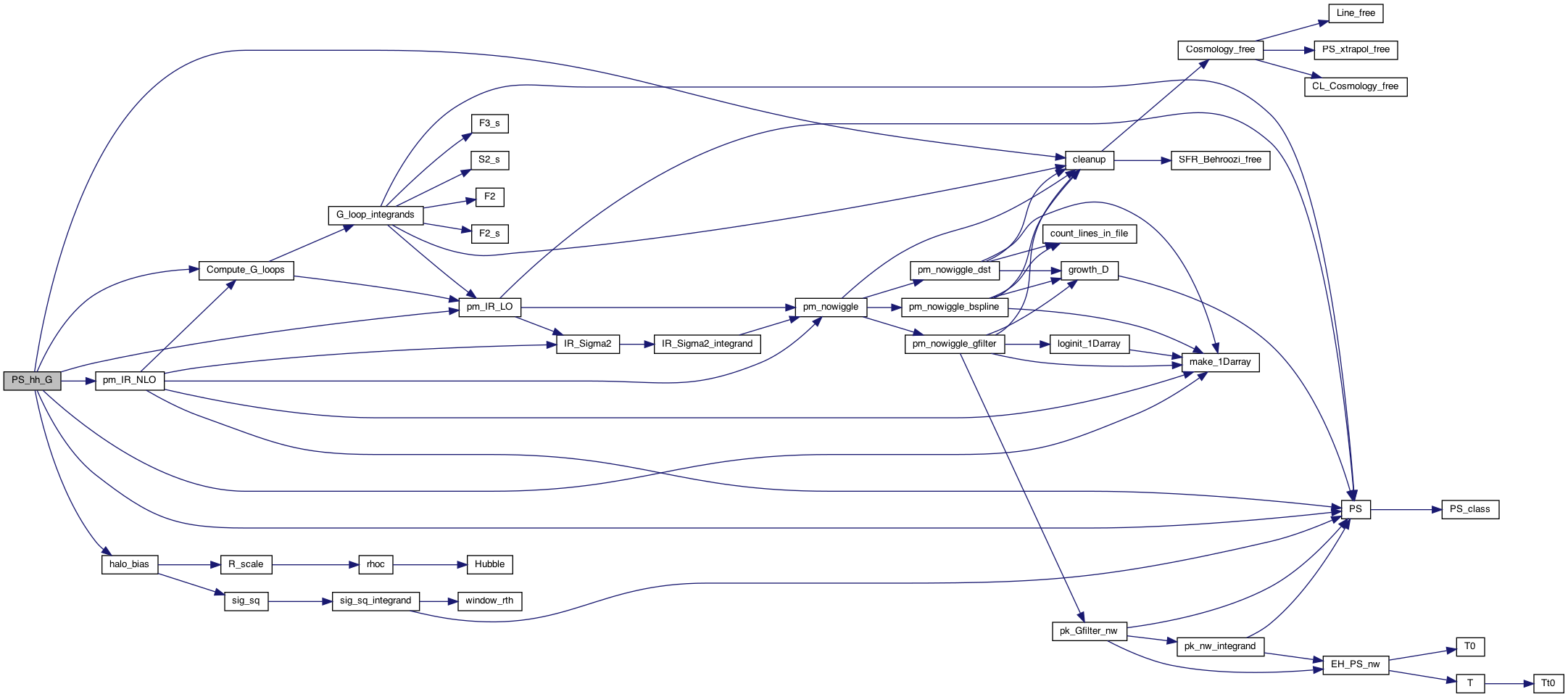
| double | PS_hh_G (struct Cosmology *Cx, double k, double z, double M, long mode_pt, long IR_switch, long SPLIT, long mode_mf) |
| | Compute the contributions up to 1loop to halo power spectrum for Gaussian initial conditions. More...
|
| |
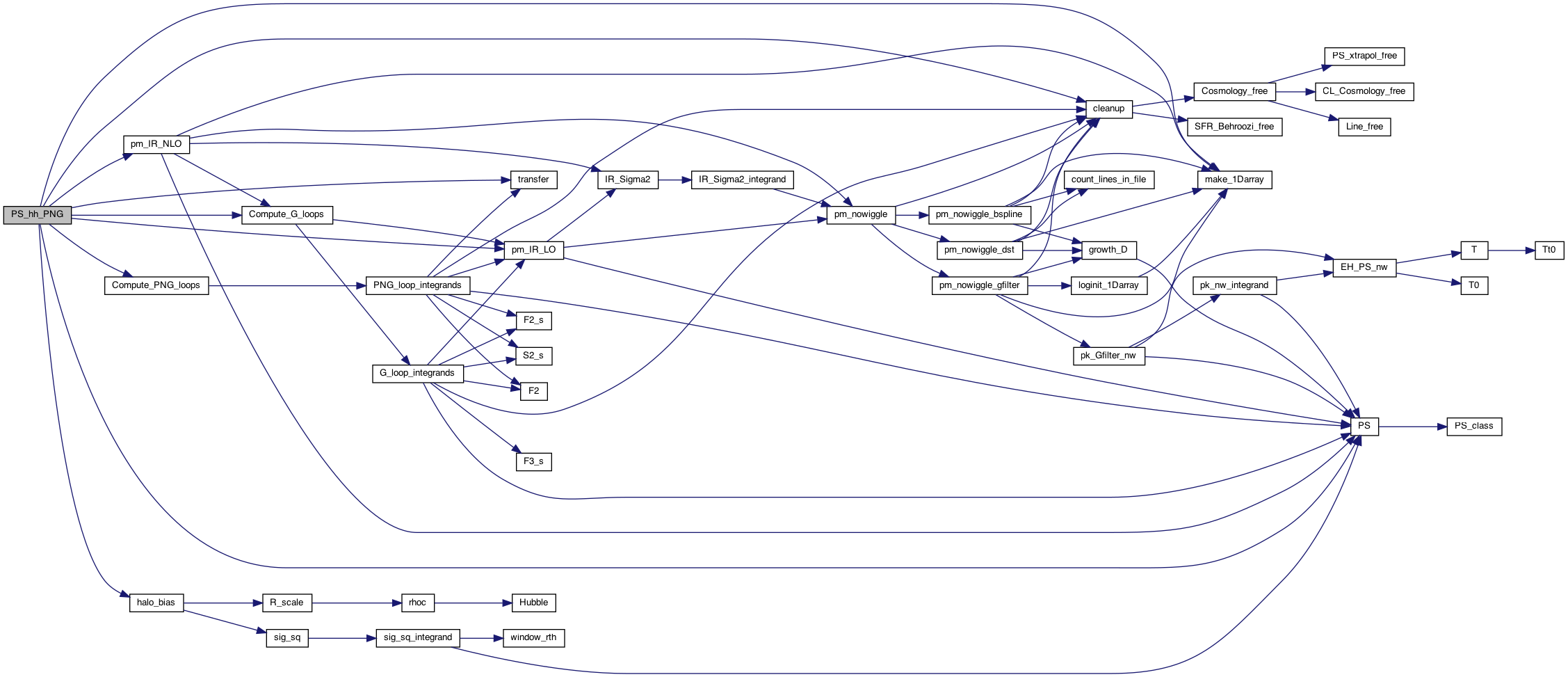
| double | PS_hh_PNG (struct Cosmology *Cx, double k, double z, double M, long mode_pt, long IR_switch, long SPLIT, long mode_mf) |
| | Compute contributions up to 1loop to halo power spectrum arising from non-Gaussian initial conditions of local shape. More...
|
| |
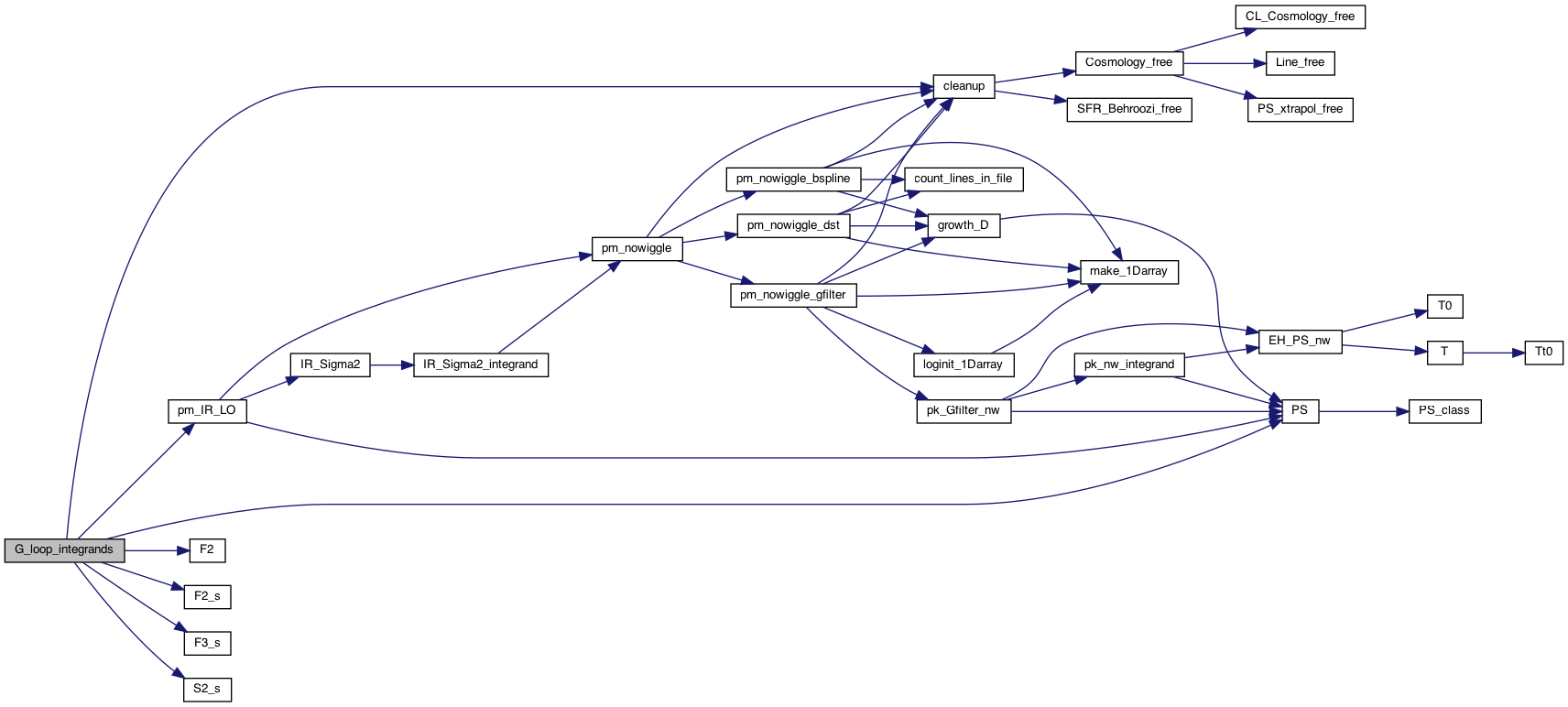
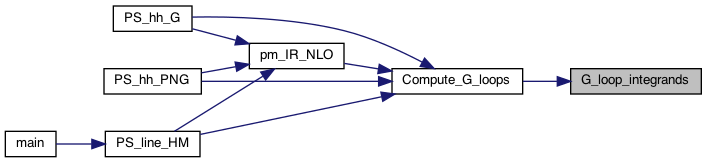
| static int | G_loop_integrands (const int *ndim, const cubareal x[], const int *ncomp, cubareal ff[], void *p) |
| | The integrand function passed passed to Cuhre integration routine to compute Gaussian 1loop terms. More...
|
| |
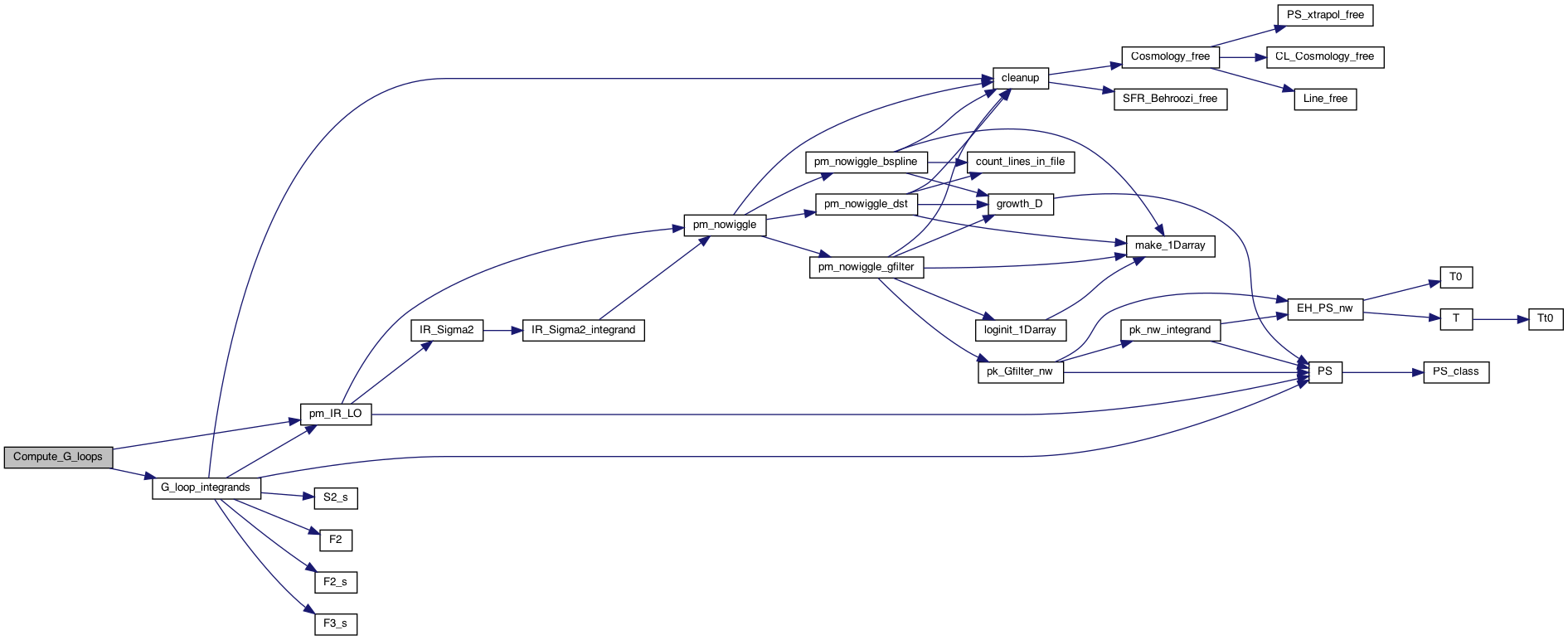
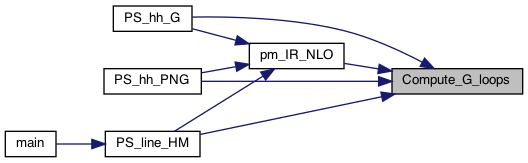
| void | Compute_G_loops (struct Cosmology *Cx, double k, double z, long IR_switch, long hm_switch, long SPLIT, double *result) |
| | Compute the loop contributions dure to nonlinear evolution of matter fluctuations and nonlinear halo bias, present for Gaussian initial conditions. More...
|
| |
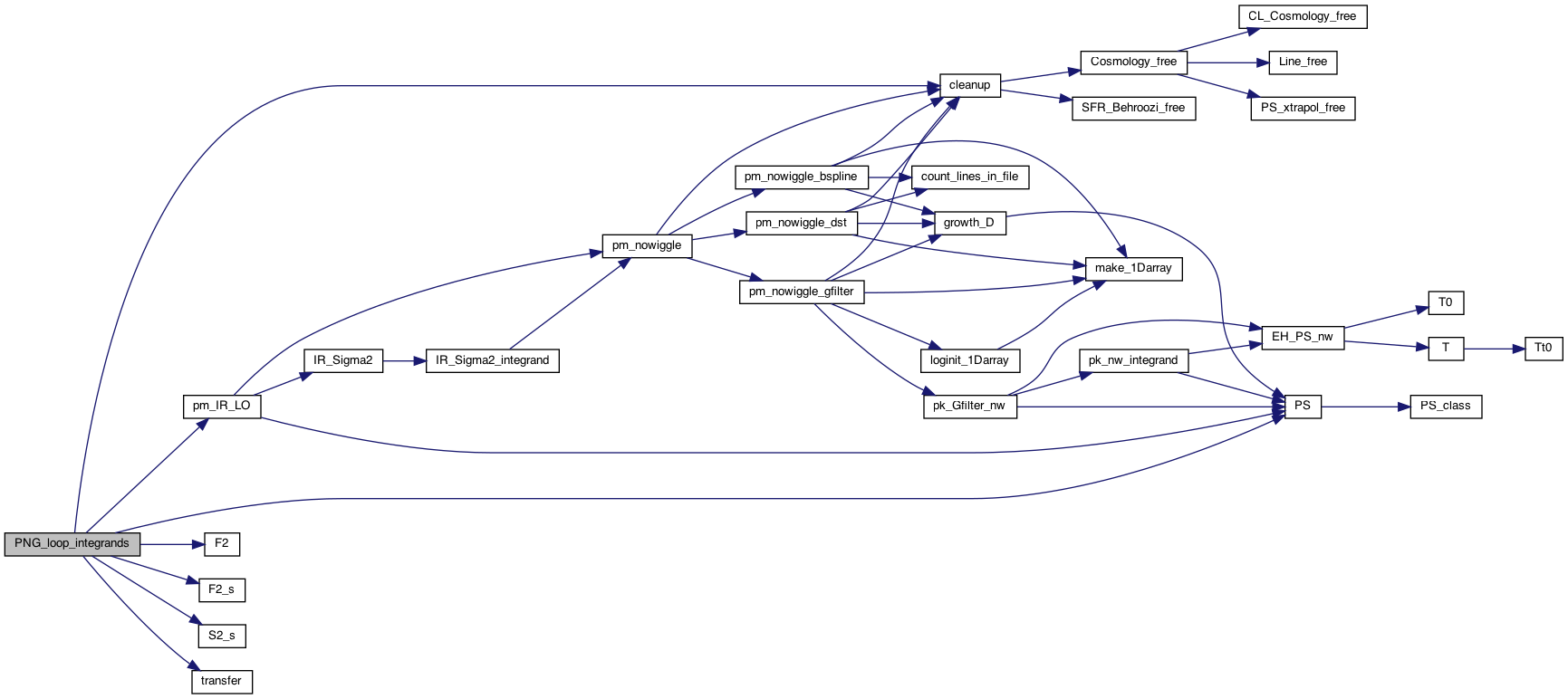
| static int | PNG_loop_integrands (const int *ndim, const cubareal x[], const int *ncomp, cubareal ff[], void *p) |
| | The integrand function passed passed to Cuhre integration routine to compute PNG 1loop terms. More...
|
| |
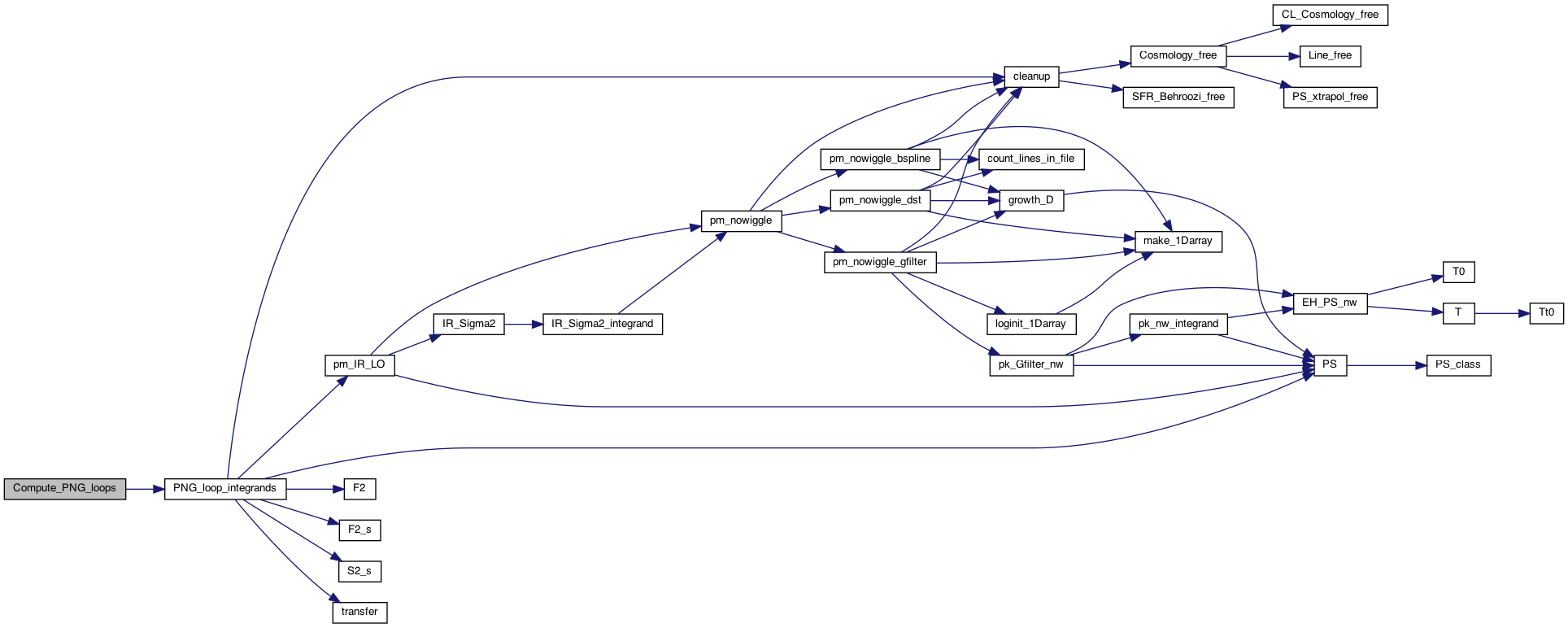
| void | Compute_PNG_loops (struct Cosmology *Cx, double k, double z, long IR_switch, long SPLIT, double *result) |
| | Compute the loop contributions dure to nonlinear evolution of matter fluctuations and nonlinear halo bias, rising from non-Gaussian initial conditions of local shape. More...
|
| |
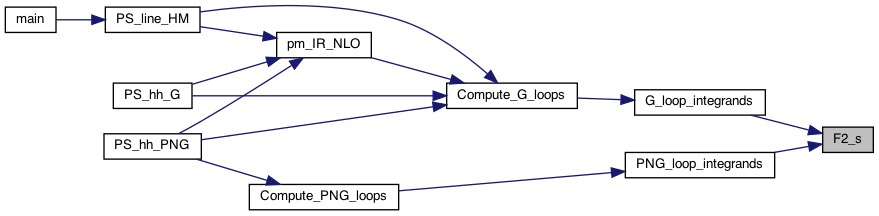
| double | F2_s (double k1, double k2, double mu) |
| |
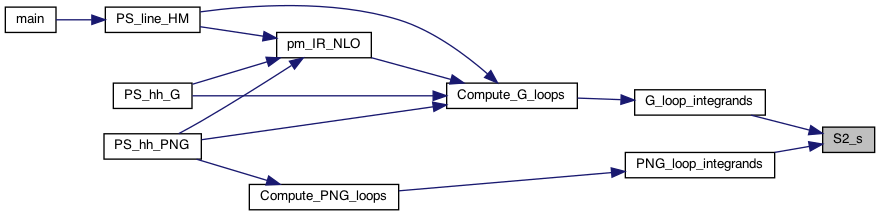
| double | S2_s (double k1, double k2, double mu) |
| |
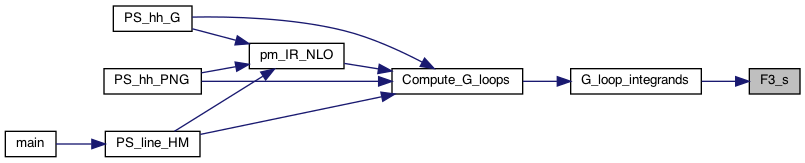
| double | F3_s (double k, double q, double mu) |
| |
| double | S2 (double mu) |
| |
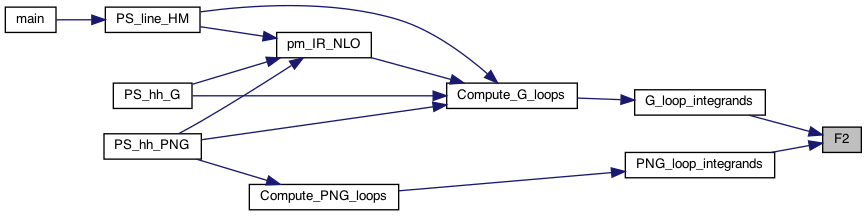
| double | F2 (double k1, double k2, double mu) |
| |
Documented real-space, direct numerical integration computation of 1loop contributions of the halo/galaxy power spectrum See arXiv:2010.14523 for explicit expressions.
Azadeh Moradinezhad Dizgah, November 4th 2021
This module computes the 1loop halo/galaxy power sprtcurm in real-space via direct numerical integration. IR-resummation and EFT counter terms are included. In addition to loops due to gravitational loops, terms arising only in the presence of local PNG are also included. The explicit expressions of all the loops are given in 2010.14523.
In summary, the following functions can be called from other modules:
- PS_hh_G()
- PS_hh_PNG()
- Compute_Gloops()
- Compute_PNGloops()
- F2_s()
- F3_s()
- S2_s()
- F2()
- S2()
| static int G_loop_integrands |
( |
const int * |
ndim, |
|
|
const cubareal |
x[], |
|
|
const int * |
ncomp, |
|
|
cubareal |
ff[], |
|
|
void * |
p |
|
) |
| |
|
static |
The integrand function passed passed to Cuhre integration routine to compute Gaussian 1loop terms.
- Parameters
-
| ndim | Input: Dimensionality of the domain of integration |
| x | Input: An array of integration variables |
| ncomp | Input: Dimensionality of the integrand function |
| ff | Input: Array of values of the integrand of dimension fdim |
| p | Input: integration parmaeters return the error status |
Model used in 1907.06666, the integrals are given in the appendix, Eq. A1, note that my S2_s = sigma^2(q,k-1) and F2_s = F2(q,k-q) in their notation. Factor of 2. * (logqmax - logqmin) is due to change of variable from 0 to logarithmic k, and a factor of 2*PI is due to integration over azimuthal angle. Note that to compare the theoretical predictions against Emiliano's measurement, since he is using a different notation for Fourier transform, I need to devide each 0 power spectrum by a factor of 1/pow(2.*M_PI,3.), which I do in my pk_lin() function. If using another notation for Fourier transform (the one that I usually use, which has a factor of 1/pow(2*M_PI,3) in the definition), you need to multiply these integrands by a factor of 1/pow(2*M_PI,3).
The integrands below correspond to the follwing bias combinaions:
| static int PNG_loop_integrands |
( |
const int * |
ndim, |
|
|
const cubareal |
x[], |
|
|
const int * |
ncomp, |
|
|
cubareal |
ff[], |
|
|
void * |
p |
|
) |
| |
|
static |
The integrand function passed passed to Cuhre integration routine to compute PNG 1loop terms.
- Parameters
-
| ndim | Input: Dimensionality of the domain of integration |
| x | Input: An array of integration variables |
| ncomp | Input: Dimensionality of the integrand function |
| ff | Input: Array of values of the integrand of dimension fdim |
| p | Input: integration parmaeters return the error status |
Factor of 2. * (logqmax - logqmin) is due to change of variable from 0 to logarithmic k, and a factor of 2*PI is due to integration over azimuthal angle. Note that to compare the theoretical predictions against Emiliano's measurement, since he is using a different notation for Fourier transform, I need to devide each 0 power spectrum by a factor of 1/pow(2.*M_PI,3.), which I do in my pk_lin() function. If using another notation for Fourier transform (the one that I usually use, which has a factor of 1/pow(2*M_PI,3) in the definition), you need to multiply these integrands by a factor of 1/pow(2*M_PI,3).
The integrands below correspond to the follwing bias combinaions:






 1.9.3
1.9.3